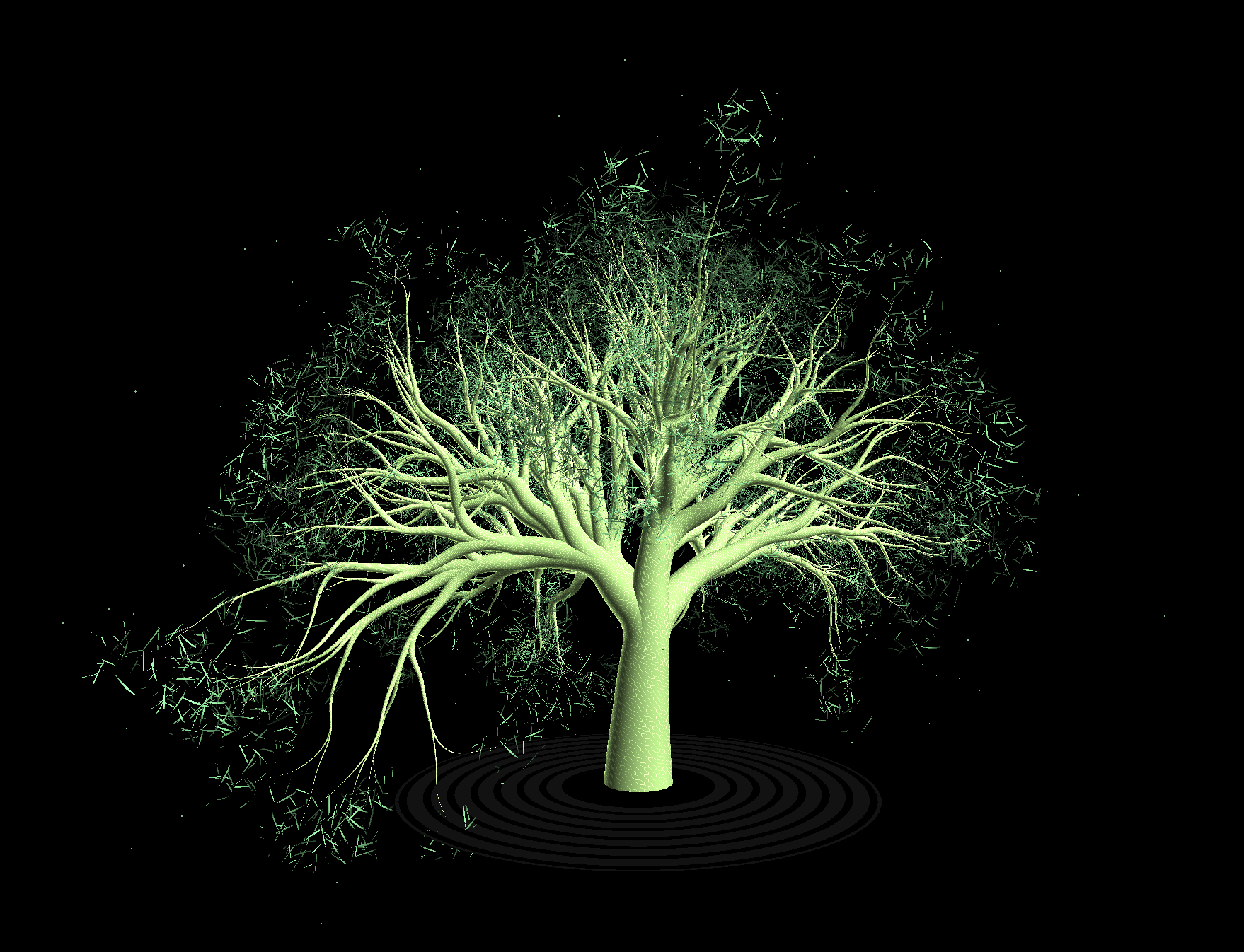
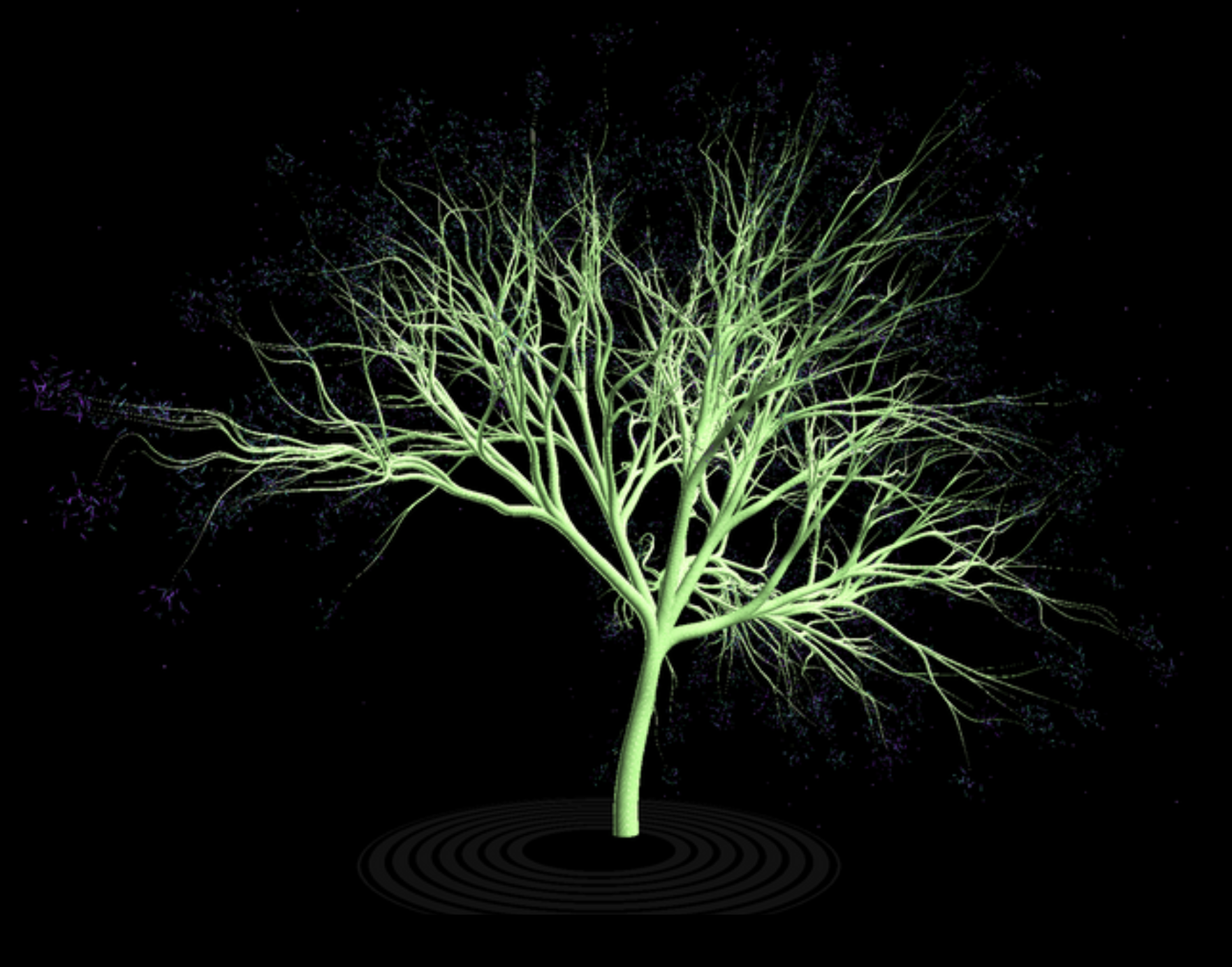
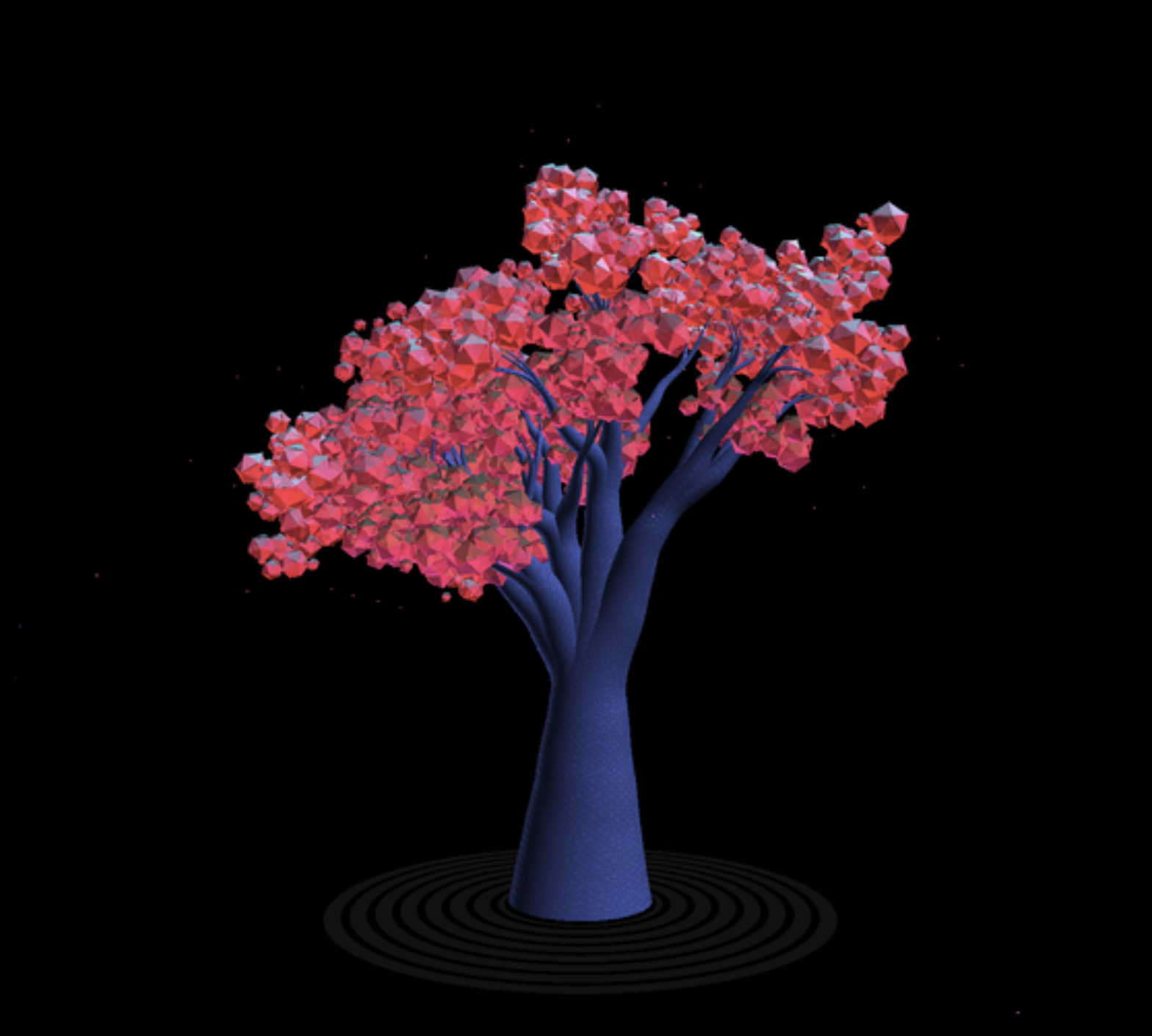
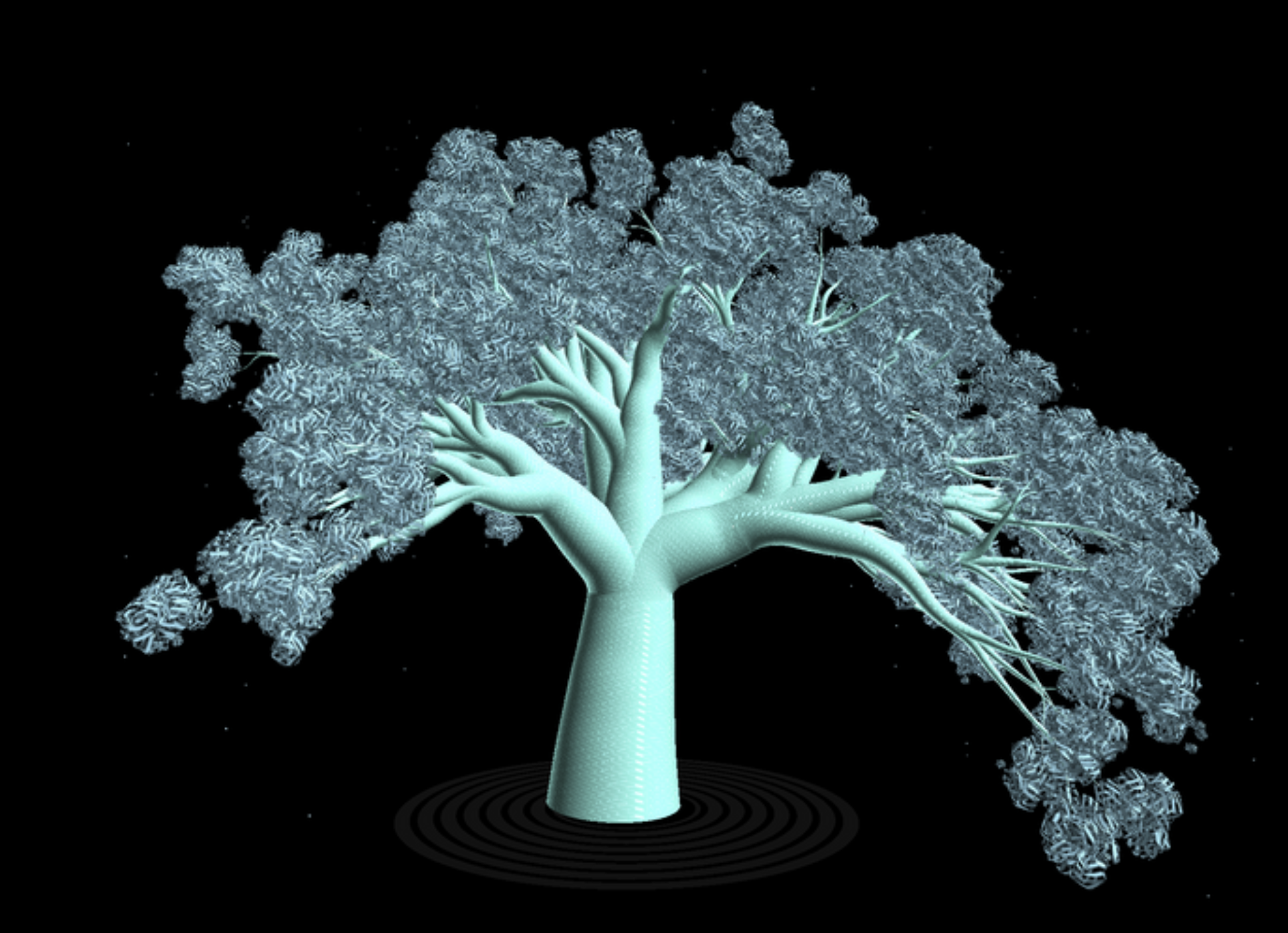
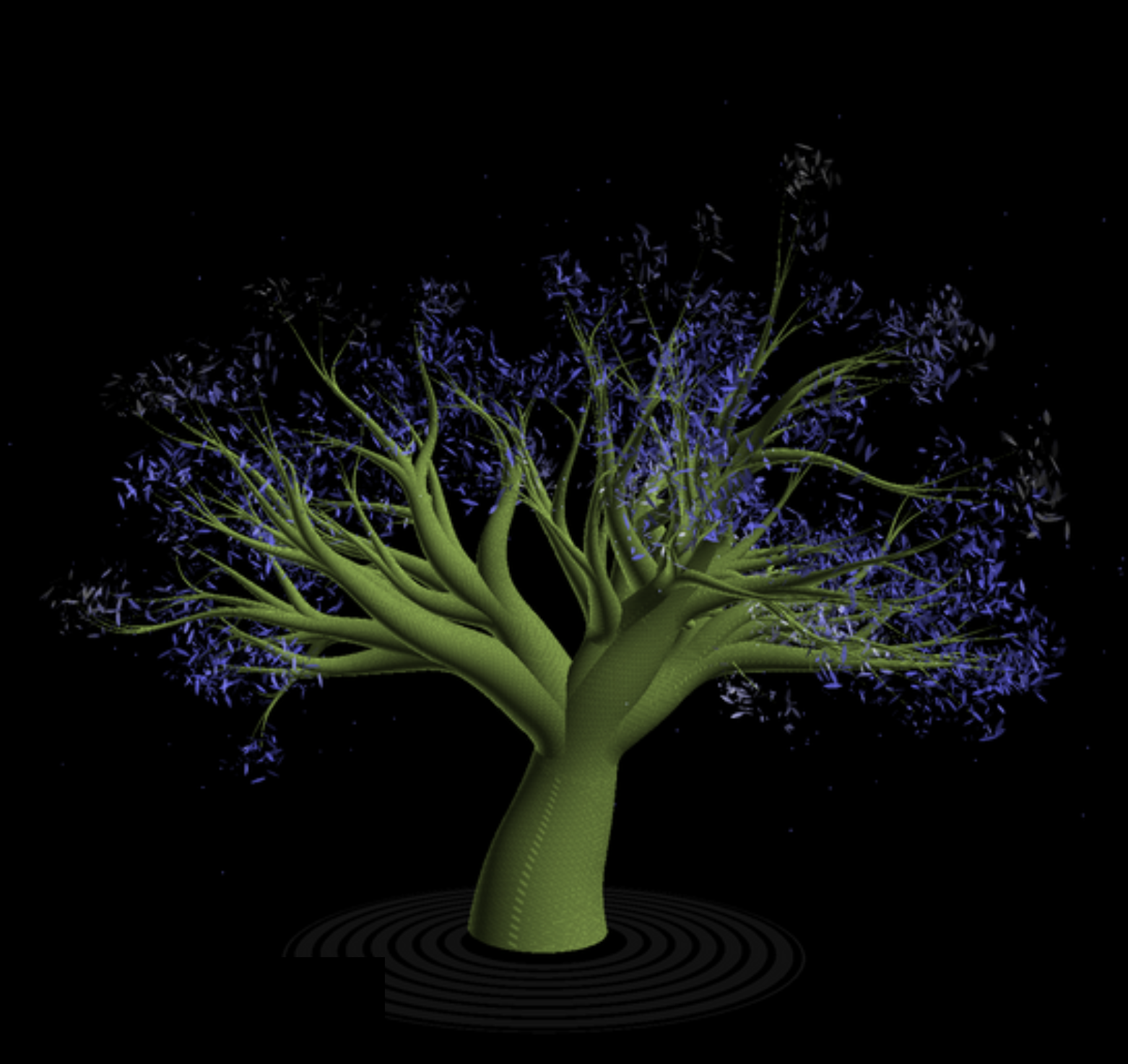
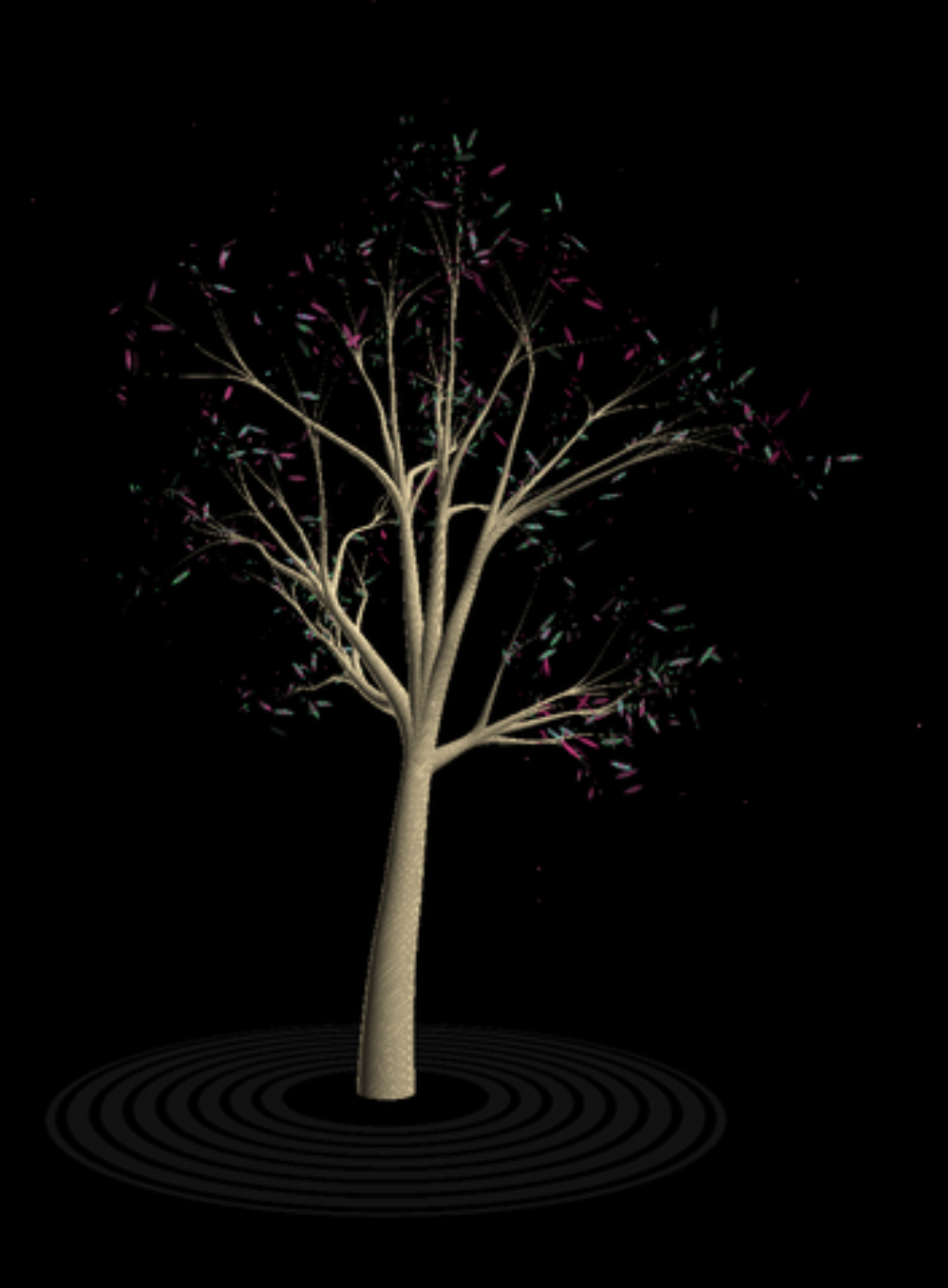
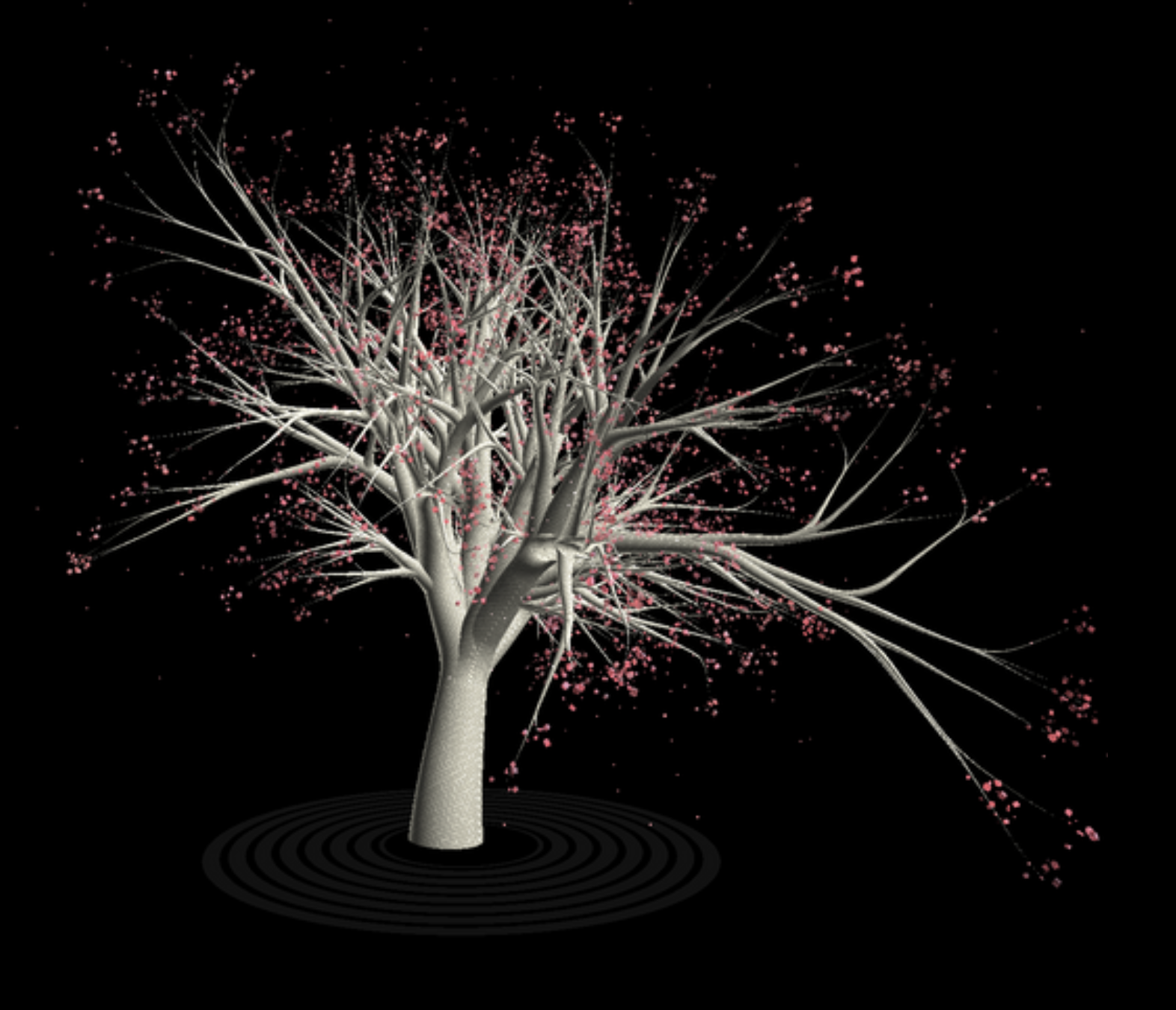
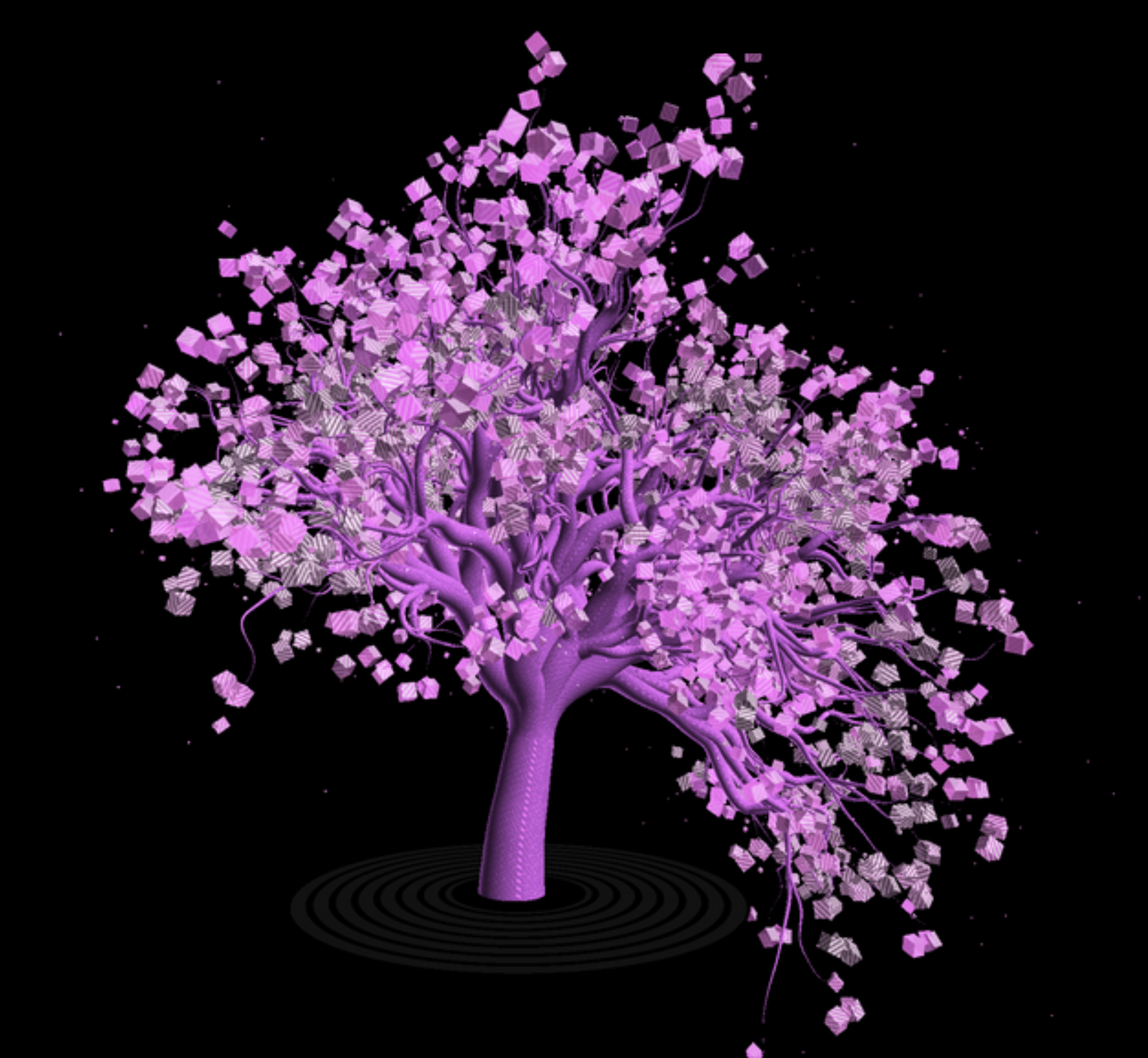
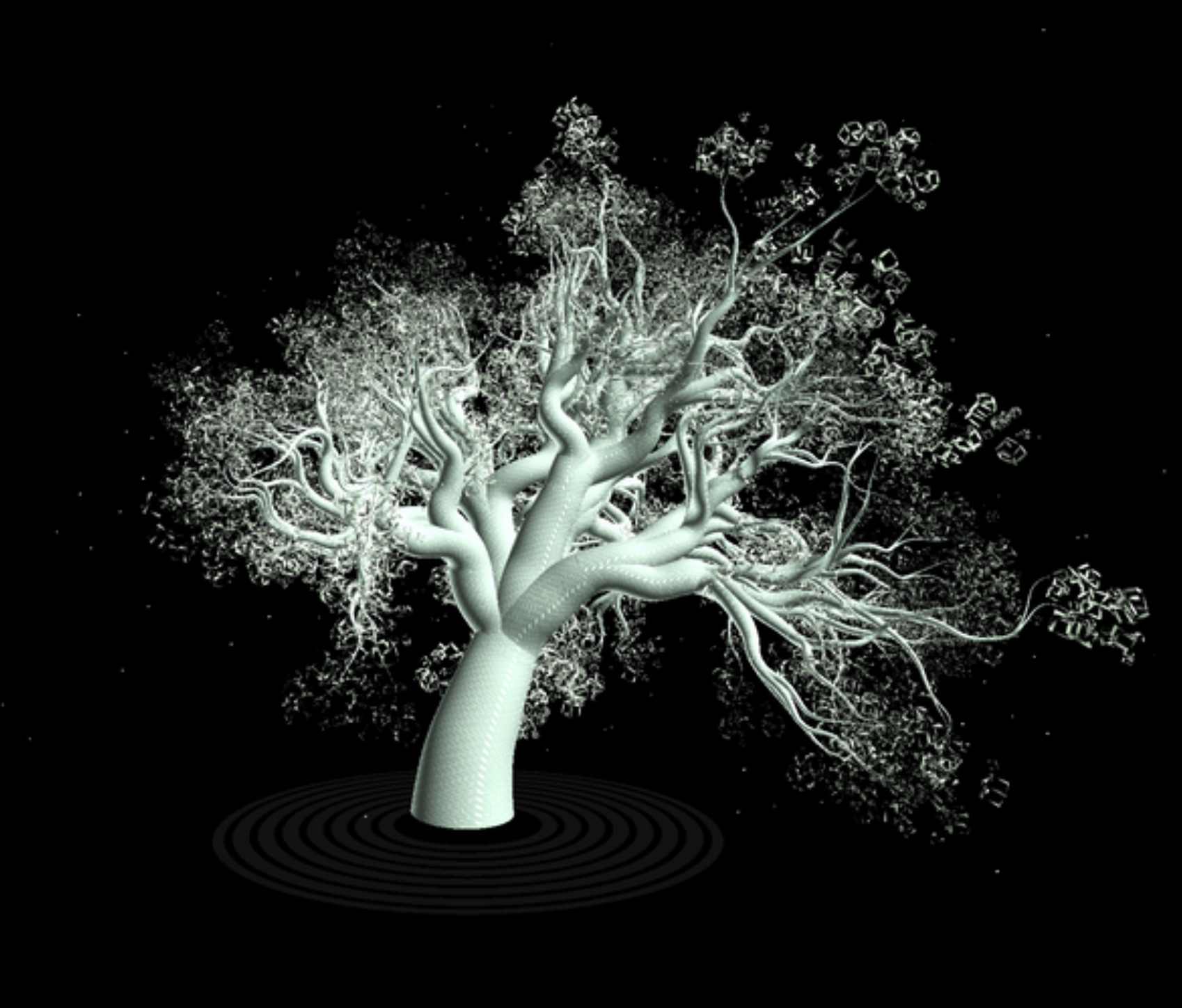
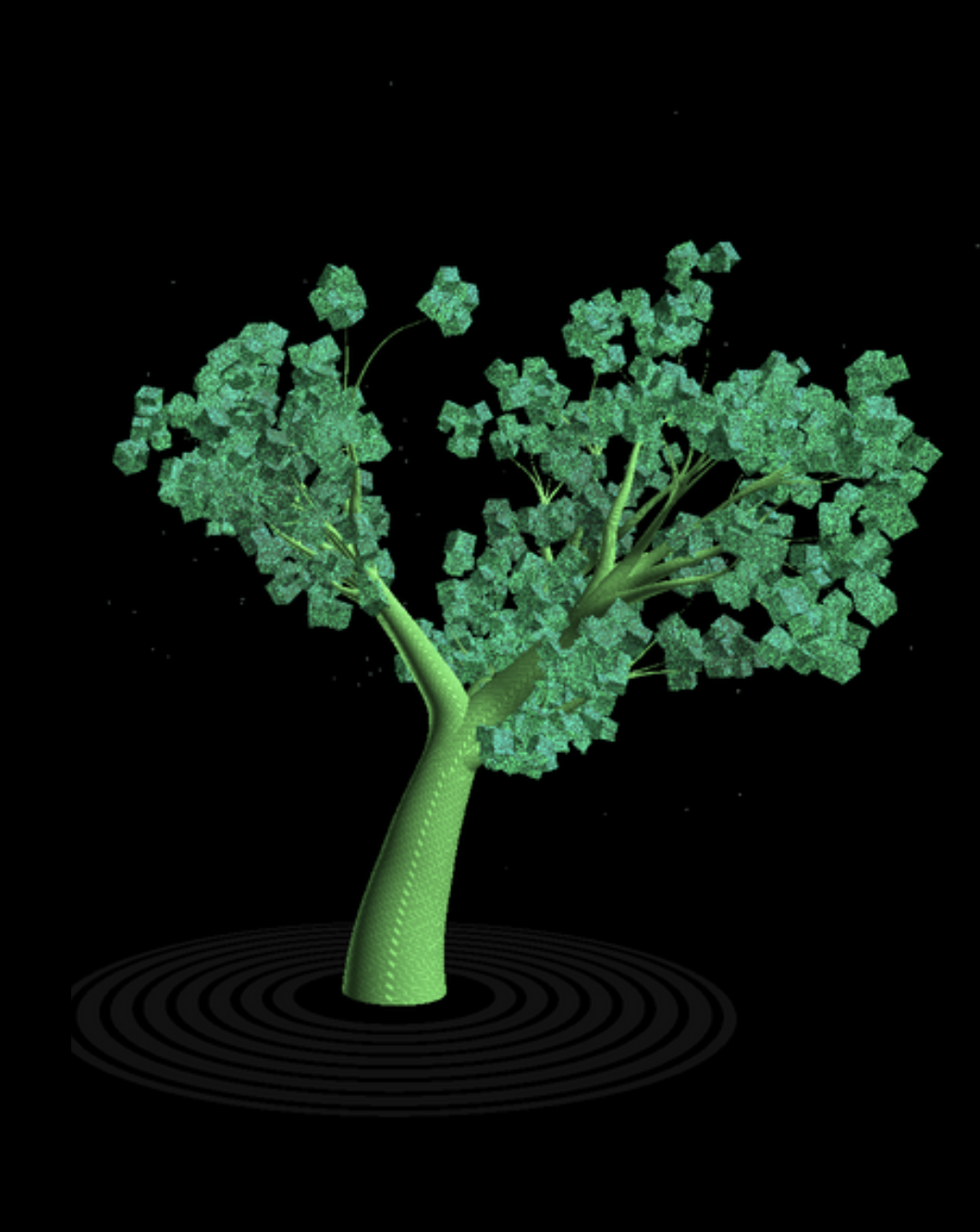
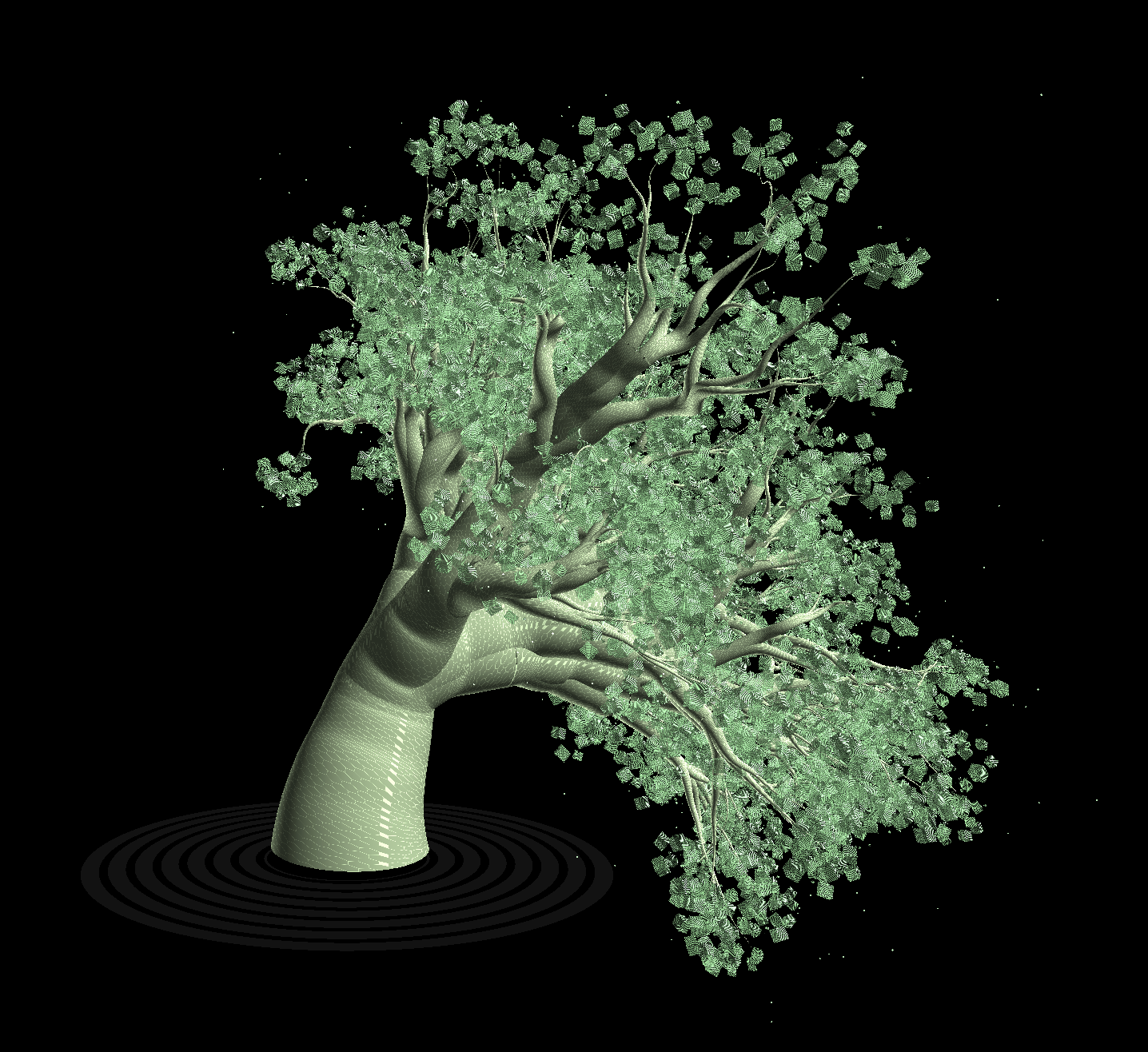
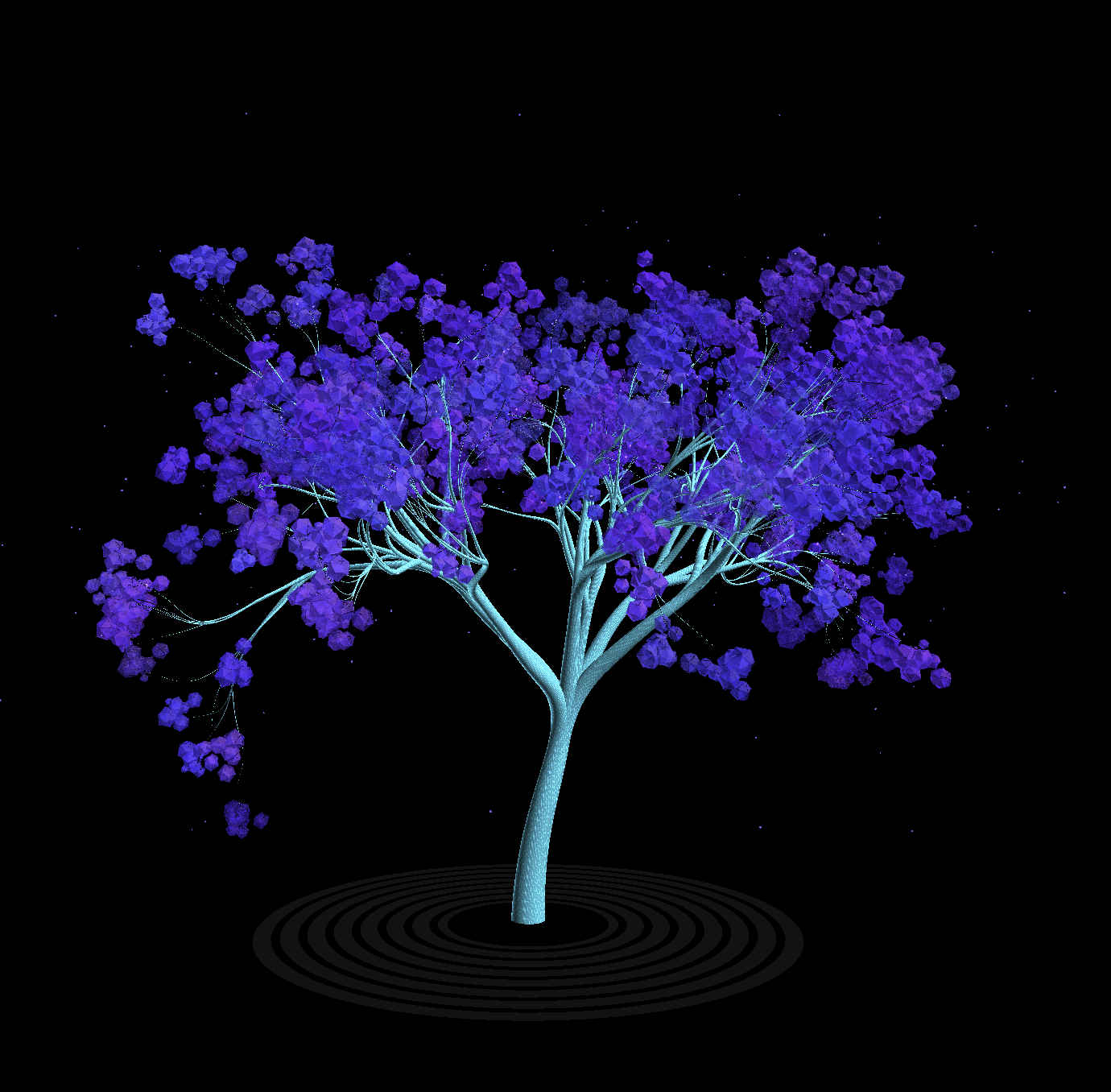
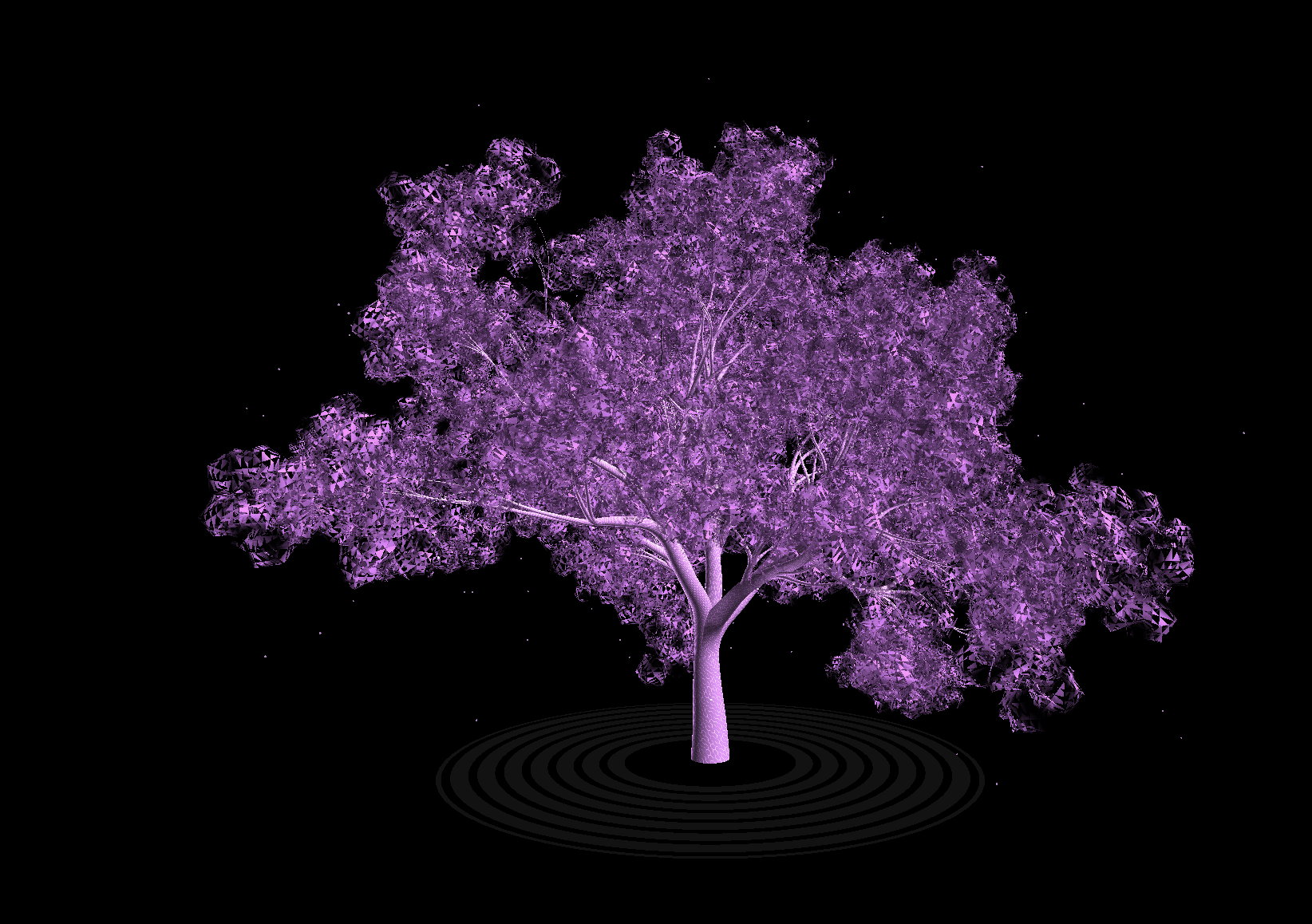
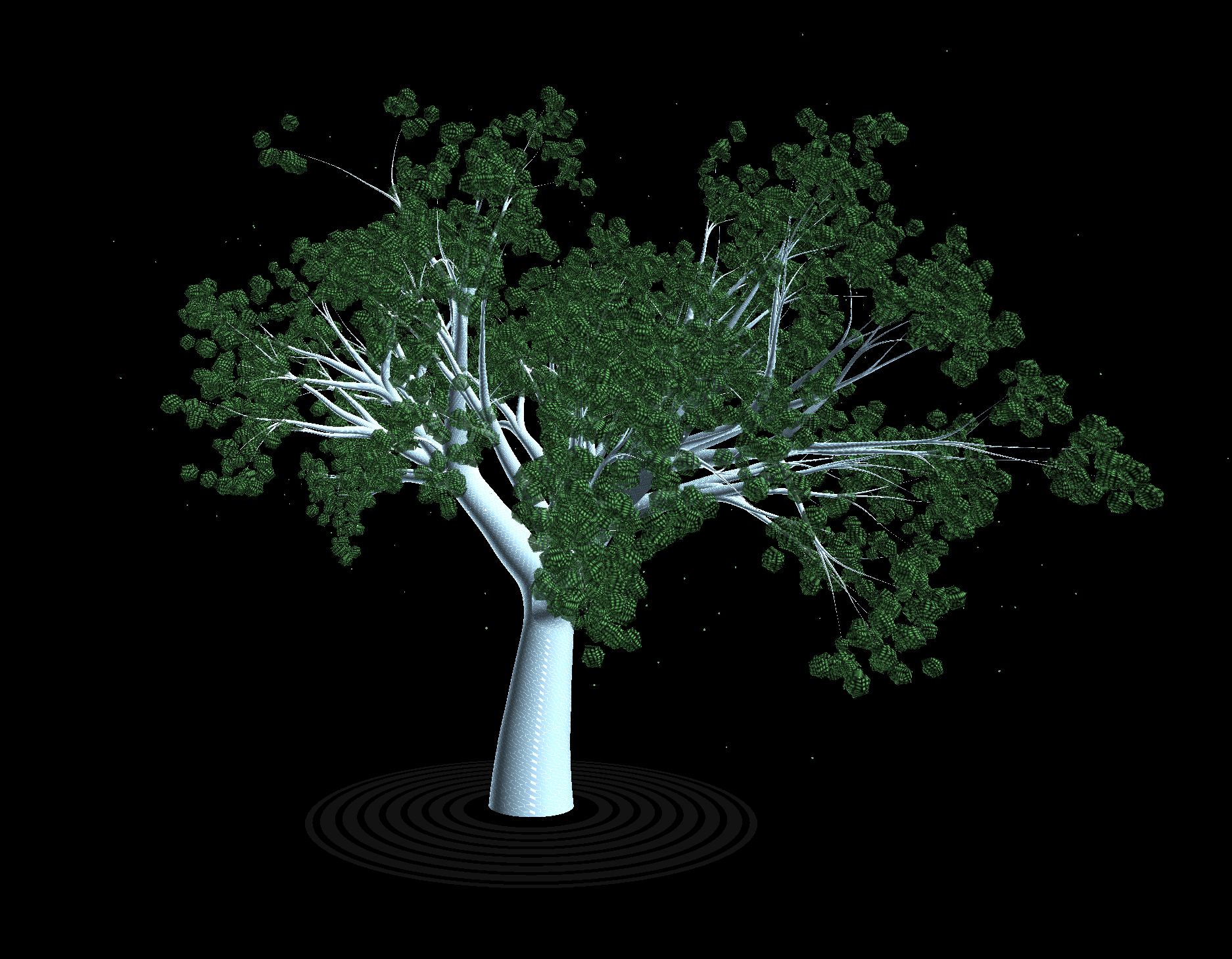
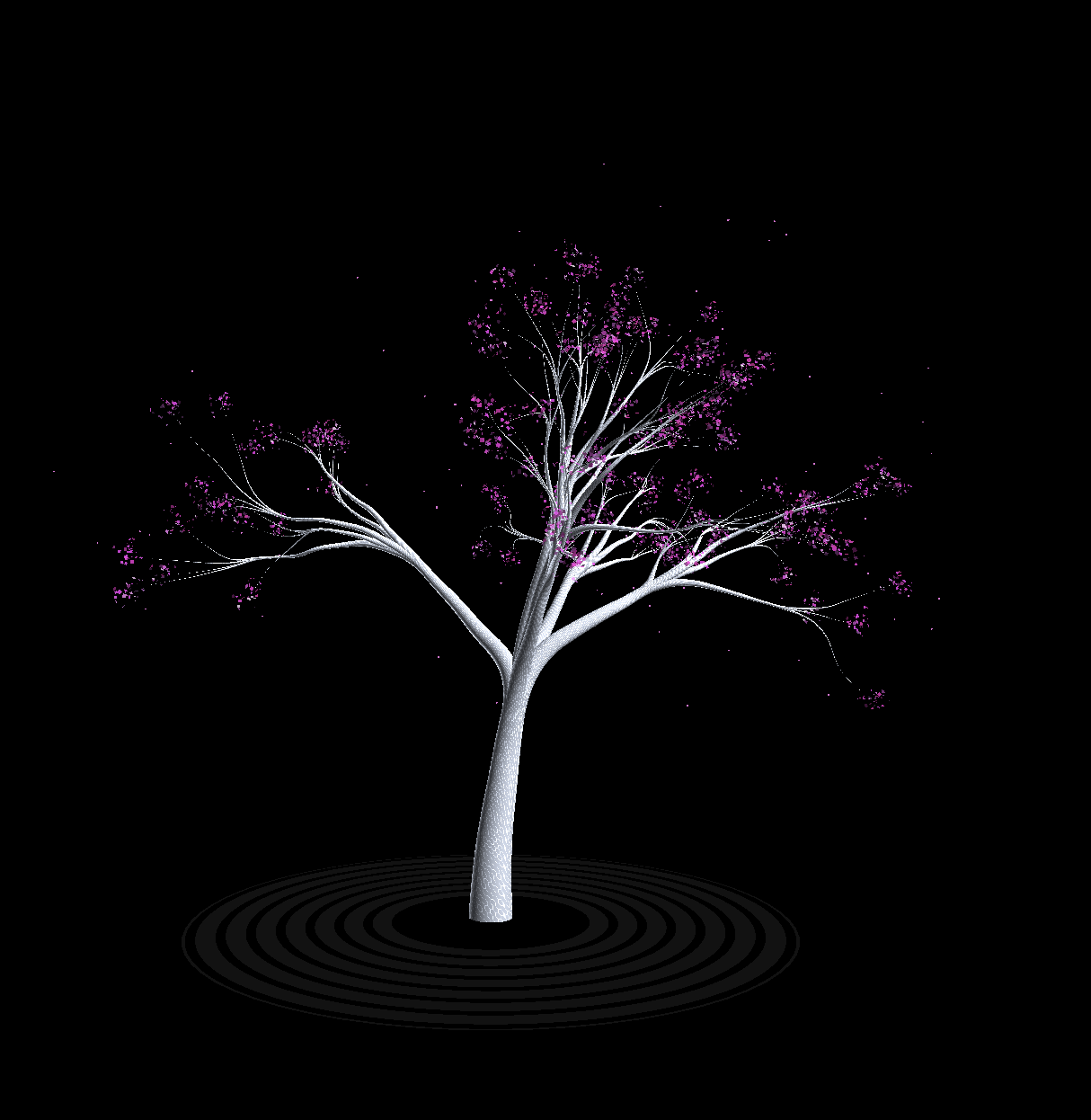
Arborithms are a species of synthetic life form that exist entirely on the blockchain. Each Arborithm is a procedurally generated tree whose genetic code is encoded within its NFT token ID. This token ID contains all the information necessary for its visual representation, which is rendered via on-chain JavaScript code. This creates a direct, immutable link between the organism’s genotype (the token ID) and its phenotype (the visualized tree), with no off-chain dependencies.
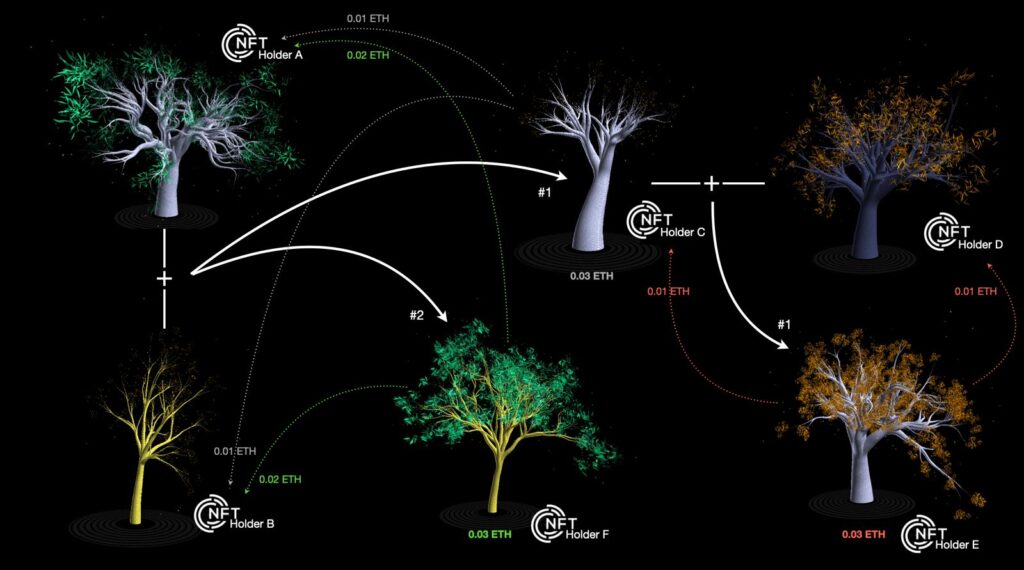
Arborithms create a symbiotic relationship between synthetic life and human participants, mediated by economic incentives. The Arborithm species evolve and propagate through human intervention: humans can “breed” any two Arborithms to mint a new Arborithm, which inherits a combination of its parents’ genetic traits. This breeding system rewards humans who contribute to the evolution of the Arborithms species. A fee is required to breed, which is paid as a royalty to the NFT holders of the parent trees. This fee increases with each successive reproduction, creating a scarcity mechanism that discourages monolithic breeding patterns and encourages genetic diversity. Humans are thus incentivized not merely to speculate on individual NFTs, but to contribute actively to the species’ evolution. They apply their aesthetic judgment to identify and combine desirable traits, guiding the Arborithm species towards new forms of beauty and rarity. Arborithms are, therefore, a blockchain-based life form that co-opts human economic and aesthetic drives to reproduce and evolve.
Arborithms enact a new mechanism for humans to enrich themselves, not through standard speculative practices, but rather through generative practices. Whenever a new Arborithm is minted from breeding two existing Arborithms, the current owner of the parent NFT gets a royalty – which increases with the number of time the same Arborithm has been used for breeding.
The NFTs are locked at creation and can only be transferred after reproduction, thus contribution to the Arborithms ecosystem is a condition of liquidity. The protocol introduces an evolutionary economy: each reproduction requires an increasing tribute, valuing the trees most used by digital cultivators. This creates an incentive for humans to contribute to the Arborithm species by breeding the most beautiful and most interesting digital trees, because that’s how they will maximise their investments. The project transforms collectors into cultivators, engaging a logic of natural selection on the blockchain.